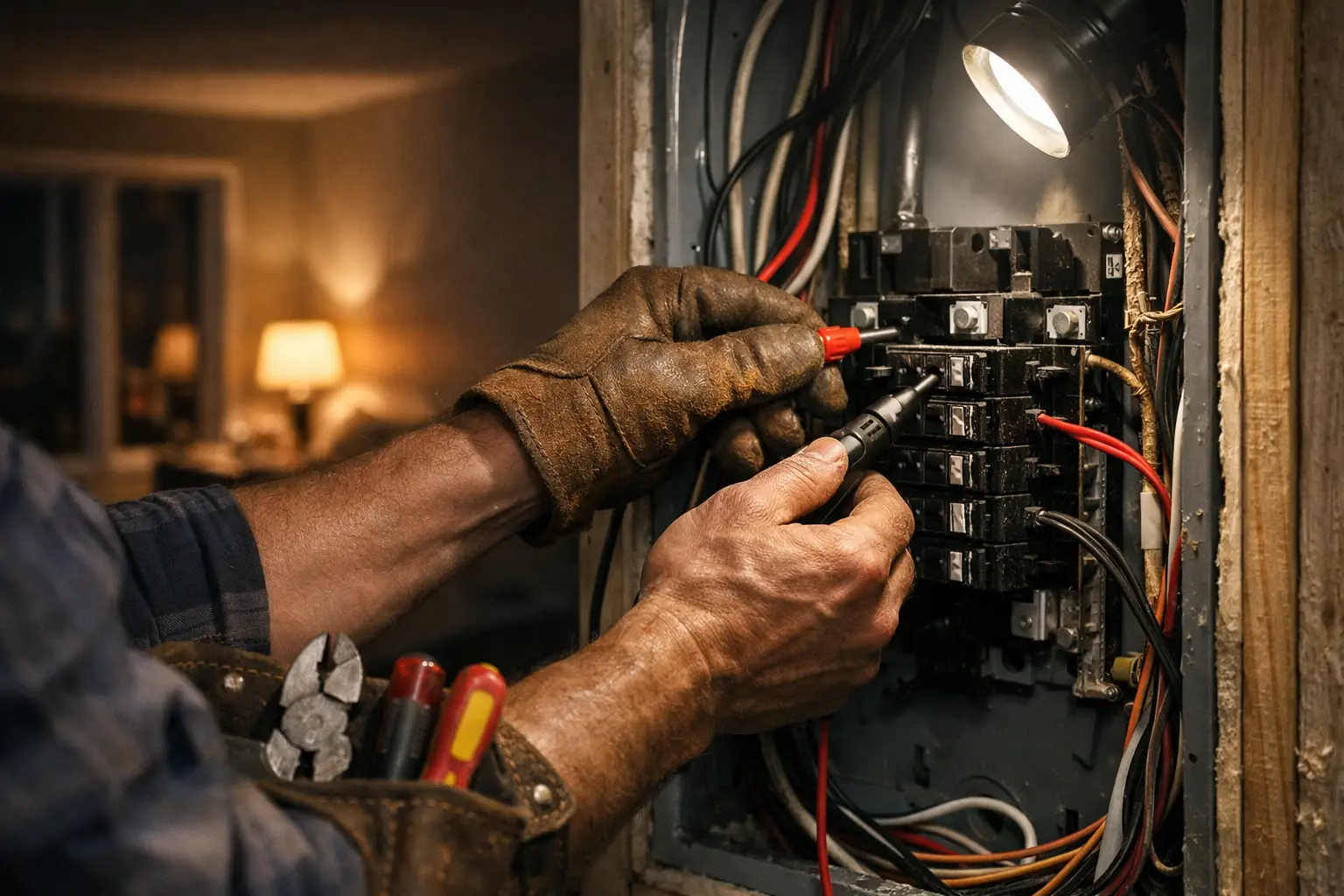
When the power is out in part of house, it usually does not mean your whole electrical system is failing. More often, one circuit has dropped out, a GFCI has tripped, a breaker is not fully reset, or there is a loose connection somewhere that needs real diagnosis. The trick is knowing the difference between a simple reset and a problem that can get worse if you keep poking at it.
This is a common call in Huntsville, Madison, and Harvest, especially in houses that have had additions, older panel work, kitchen updates, garage conversions, or a few too many things added over the years without a clean circuit plan. Homeowners usually notice it one of two ways. Half the kitchen is dead but the fridge still runs. Or a bedroom, bathroom, and hallway all go dark at once, while the rest of the house looks normal.
Why power is out in part of house
Electricians think in circuits, not just rooms. One breaker may feed receptacles in a bathroom, lights in a hallway, and part of a garage if the home was wired a certain way. So when only part of the house loses power, the issue is usually tied to one branch circuit or one section of a multi-device run.
The most common cause is a tripped breaker. That sounds obvious, but breakers do not always look fully tripped. Some sit in a middle position that is easy to miss. If you have lost power to a section of the home, check the panel for a breaker that is out of line with the others. A proper reset means switching it firmly all the way off first, then back on.
The next likely cause is a tripped GFCI receptacle. These devices often protect more than the outlet they are installed in. A bathroom GFCI may also feed a garage receptacle. A garage GFCI may feed exterior outlets. In some homes, one nuisance trip can knock out multiple spots that seem unrelated. That is why partial outages confuse people.
Then there is the category that matters more – a failed connection. Loose backstabbed devices, worn receptacles, damaged wirenuts, failed neutrals, overheated breaker connections, and aging panel components can all leave part of the house dead or acting strange. This is where the problem moves past inconvenience and into something that needs a licensed electrician.
What to check first when power is out in part of house
Start with the easy and safe checks. Look for a tripped breaker and reset it correctly once. Check any GFCI receptacles in bathrooms, kitchen, garage, laundry, exterior locations, and unfinished areas. Press the reset button firmly.
If the power comes back and stays back, good. But if the breaker trips again right away, or the GFCI will not reset, stop there. That usually means there is a fault on the circuit, a bad device, or moisture where it should not be.
Also pay attention to what is still working. If some lights are dim, some outlets are dead, and a few things still run, that can point to a loose neutral instead of a complete hot-side loss. Loose neutral issues are not handyman work. They need careful tracing, testing, and repair.
One more thing – ask whether anything changed right before the outage. Did someone plug in a space heater, air fryer, vacuum, or hair tool? Did it happen after a storm? Did a bathroom receptacle quit after plugging in a phone charger near a wet sink? Those details help narrow down whether the problem is overload, a ground fault, weather-related damage, or a failing device.
Signs the problem is more serious than a reset
If the breaker will not stay on, that is a red flag. If you smell something hot near the panel or a receptacle, that is a bigger red flag. If lights were flickering before the outage, if outlets feel warm, or if you heard crackling, stop using that area and get it checked.
Another bad sign is when one side of a room works but the rest does not, especially in an older home. We often find a failed receptacle upstream feeding the rest of the circuit. Homeowners think three outlets died, but really one bad connection killed everything downstream. That does not always mean a major overhaul, but it does mean someone needs to open the right boxes, inspect terminations, and make a code-correct repair.
If the issue started after rain, there may be water intrusion in an exterior box, outdoor light, crawlspace junction, or service equipment component. If the outage affects kitchen counter outlets, bathrooms, garage receptacles, laundry, or exterior plugs, GFCI protection is part of the diagnostic path, but so is the condition of the wiring itself.
Breaker problem or wiring problem?
Sometimes the breaker is doing exactly what it should. It trips because the circuit is overloaded or faulted. In that case, replacing the breaker without finding the reason is sloppy work.
Other times, the breaker itself is weak or not making good contact with the bus. That is less common, but it happens, especially in older panels or panels with a rough service history. If a section of the house loses power and the breaker seems normal but the circuit still tests dead, the problem may be in the panel, at the breaker connection, or at the first device on the run.
This is where experience matters. A good residential electrician does not just swap parts and hope. He traces the circuit, checks for line and load issues, looks for shared neutral complications where relevant, and verifies the repair under actual load.
Why partial outages keep coming back
A lot of recurring partial outages come from poor previous work. We see worn receptacles carrying through-feed load they were never handling well. We see remodel circuits tied in wherever someone found power. We see garages and exterior outlets daisy-chained in ways that make future failures hard to track.
The outage may look random, but usually there is a pattern. The breaker trips only when the microwave and toaster run together. The garage receptacles die every time it rains. The upstairs bedroom loses power whenever a window AC kicks on. Those are not mysteries. They are clues.
Sometimes the right fix is small – replace a failed GFCI, repair a burned splice, or correct a bad termination. Sometimes the right fix is bigger – split overloaded circuits, add a dedicated line, or address an aging panel that is no longer giving reliable service. It depends on what the house is asking the system to do.
When to call a licensed electrician
Call if you have reset the breaker once and it trips again. Call if a GFCI will not reset. Call if part of the house is dead and you cannot identify a clear cause. Call immediately if there is heat, odor, buzzing, or visible damage.
You should also call if this is not the first time. Repeat outages are usually the house telling you the problem was never really fixed. A direct diagnosis is cheaper than chasing the same symptom three times.
For homeowners, the real value is not just getting power back on. It is knowing why it went out, whether the repair is solid, and whether the circuit is set up properly for how you actually use the house now. Houses in this area are carrying more load than they did twenty years ago. Add a freezer in the garage, a home office, a remodeled kitchen, or a future EV charger, and weak spots show up fast.
At Huntsville Wire and Home, this kind of call is treated like diagnostic work, not a sales opportunity. That matters. You want the person finding the failure to understand the circuit, the code, and the practical fix, not just quote the biggest thing on the truck.
A good repair solves the cause, not just the outage
If your power came back after one reset, keep an eye on it. If it comes back with flickering, warmth, or another trip, the issue is still there. Electricity usually gives a warning before a complete failure. The smart move is to catch it while it is still one circuit and one visit, not after it turns into damaged devices or panel trouble.
When part of a house goes dark, the right answer is not panic, and it is not guesswork. It is a clean diagnosis, a code-focused repair, and a clear explanation of what failed and why. That is how you get the lights back on and keep them on.