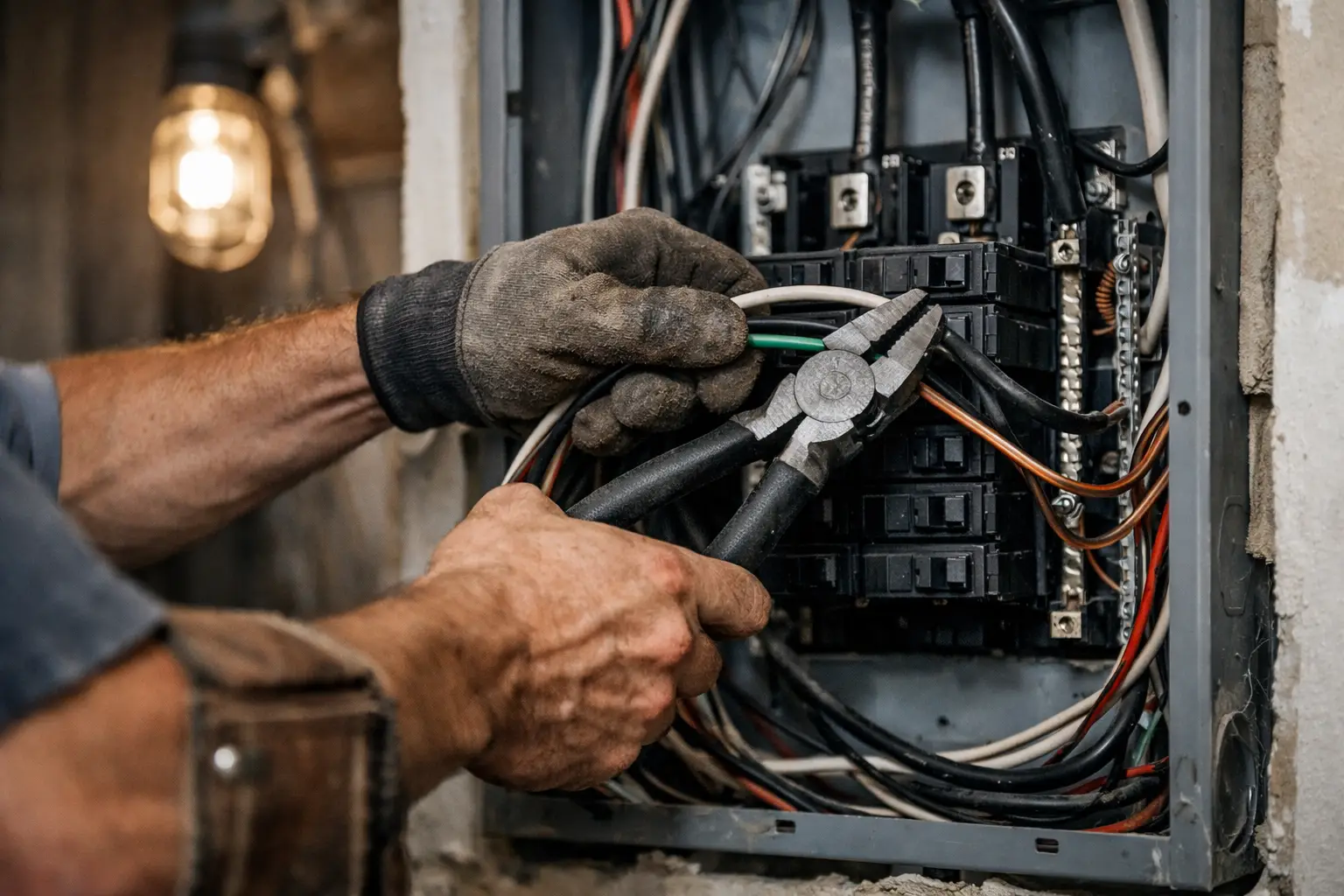
If your breakers keep tripping every time the microwave, HVAC, or dryer kicks on, you are probably not asking a small question anymore. You are asking when to replace electrical panel equipment instead of just resetting breakers and hoping for the best. That matters because some panels are simply overloaded, some are worn out, and some were never a good product to begin with.
Homeowners around Huntsville, Madison, and Harvest run into this a lot in older houses and in newer homes that are adding more electrical demand than the original setup was built to handle. A panel is not something you replace on a calendar. You replace it when age, condition, product history, or added load says the existing equipment is no longer the right fit.
When to replace electrical panel equipment
The short answer is this: replace the panel when it is unsafe, unreliable, undersized, or no longer code-appropriate for the work you need done. That sounds broad because it is. A panel can look fine from across the room and still have serious problems inside.
The most obvious case is physical damage. If there is burning, heat damage, melted insulation, corrosion, water intrusion, or breakers that no longer seat correctly, the panel is past the point of casual troubleshooting. A licensed electrician needs to evaluate whether individual parts can be addressed or whether the whole assembly needs to go.
The next category is performance. If lights dim hard when major appliances start, breakers trip under normal use, circuits are doubled up beyond what the home really needs, or there are not enough spaces left for required new circuits, the panel may be telling you it has hit its practical limit. That does not always mean the whole service needs to be upsized, but it often points in that direction.
Then there is brand history. Some older panel lines have known reliability or safety concerns. In those cases, replacement is often recommended even if the panel is still technically operating. Homeowners do not love hearing that, but electrical equipment is not like an old refrigerator you keep alive with a little patience. If the protective devices are questionable, the whole point of the panel is compromised.
Warning signs that should not be ignored
A warm breaker panel is one thing. A hot panel, a burning smell, buzzing, crackling, or breakers that feel loose is another. Those are not wait-and-see symptoms. They need prompt inspection.
Rust inside the panel is another big one, especially in garages, basements, or areas with moisture issues. Corrosion can damage bus bars, terminals, and breaker connections. Once that starts, you are not dealing with a cosmetic problem. You are dealing with equipment that may not make solid contact anymore.
Breaker behavior also matters. If a breaker trips once after a legitimate overload, that is normal. If it keeps tripping under ordinary use, refuses to reset, or has clearly become loose or inconsistent, the issue may be the breaker, the circuit, or the panel connection itself. A good diagnosis separates those possibilities instead of jumping straight to a sales pitch.
Homeowners also ask about flickering lights. Sometimes that is a fixture issue or a loose connection somewhere else in the house. Sometimes it is tied to service conductors, neutral problems, or a panel that is no longer handling load changes cleanly. The point is that flicker alone does not prove panel replacement, but repeated voltage-related symptoms absolutely justify a closer look.
Age matters, but not by itself
A lot of people want a simple age cutoff. There really is not one. Some older panels are still serviceable. Some much newer ones are already in rough shape because of moisture, bad installation, or abuse.
That said, if your panel is several decades old, especially in a home that has had additions, remodeled kitchens, new HVAC equipment, or pieced-together electrical work over the years, age becomes a stronger factor. Older homes were not designed around EV chargers, tankless water heaters, multiple refrigerators, home offices, workshop loads, and modern kitchen circuits.
So age is not the only reason to replace a panel, but age plus added demand is often the combination that pushes the decision. You may have gotten by for years with a 100-amp service and a crowded panel. Then one day you add a charger in the garage or a new heat pump, and now the math changes.
When an upgrade is about capacity, not failure
Some panel replacements are not driven by damage at all. They are planned upgrades because the house needs more power or more circuit space.
That comes up all the time with EV chargers, hot tubs, shop equipment, additions, finished basements, outdoor kitchens, and major kitchen remodels. These projects usually require dedicated circuits, and dedicated circuits need room in the panel. Even if tandem breakers or creative workarounds technically fit, that does not mean it is the best long-term setup.
This is where homeowners sometimes get mixed messages. One contractor says the old panel is fine. Another says everything has to be replaced immediately. The honest answer is usually in the middle. If the existing panel has enough capacity, is in good condition, and accepts the needed breakers properly, it may stay. If it is cramped, outdated, or already running near its limit, replacement becomes the cleaner and safer move.
Panels that deserve extra scrutiny
Not all panel brands and models have the same track record. Certain older panels are well known in the trade for problems with breaker performance or bus connection reliability. If your house has one of those, the conversation changes from “Is it still working?” to “Do you want to keep betting on old equipment with a bad reputation?”
That is especially relevant during home sales and inspection repairs. Buyers get nervous when an inspector flags a panel with a known history, and lenders or insurers may care too. Even if there has not been a failure yet, replacement can make sense because it clears a real issue instead of papering over it.
This is also where direct, electrician-led service matters. You want someone who can tell you whether your panel is merely old or whether it is one of the units that makes experienced electricians raise an eyebrow the second the cover comes off.
Repair or replace?
Not every panel problem means full replacement. Sometimes a bad breaker, a failed main, a damaged lug, or a specific circuit issue can be repaired if the panel itself is otherwise sound and parts are appropriate and available.
But there are limits to that approach. If the panel is obsolete, has widespread corrosion, has signs of overheating on the bus, lacks sufficient space, or is tied to a service size that no longer matches the house, repair becomes money spent in the wrong direction. It is like patching one weak spot on a system that is already telling you it is done.
A good electrician should be able to explain that difference clearly. If replacement is recommended, you should hear why in plain language – not just “you need an upgrade,” but what is actually wrong, what load is being added, and what the new setup solves.
What homeowners should expect from the decision
Panel replacement is not a cosmetic upgrade. It is infrastructure work. The value is in safety, reliability, future capacity, and code compliance.
It can also clean up years of bad electrical history. We see homes with abandoned breakers, mislabeled circuits, doubled neutrals, messy add-ons, and old modifications that made sense to somebody twenty years ago but do not hold up now. Replacing the panel gives the electrician a chance to correct a lot of that and build a cleaner starting point for the house going forward.
The trade-off is cost. A panel replacement is more expensive than swapping a breaker or adding a small subpanel in the right situation. That is why diagnosis matters. Homeowners deserve a real answer, not a blanket recommendation.
If you are in North Alabama and trying to sort out whether your panel is dangerous, undersized, or just old, the right move is to have it evaluated by somebody who works on residential service equipment every week. At Huntsville Wire and Home, that means a licensed electrician looking at the actual condition, the actual load, and the actual scope of work you want next.
If your house is giving you warning signs, believe them early. Panels usually do not ask for attention politely forever.