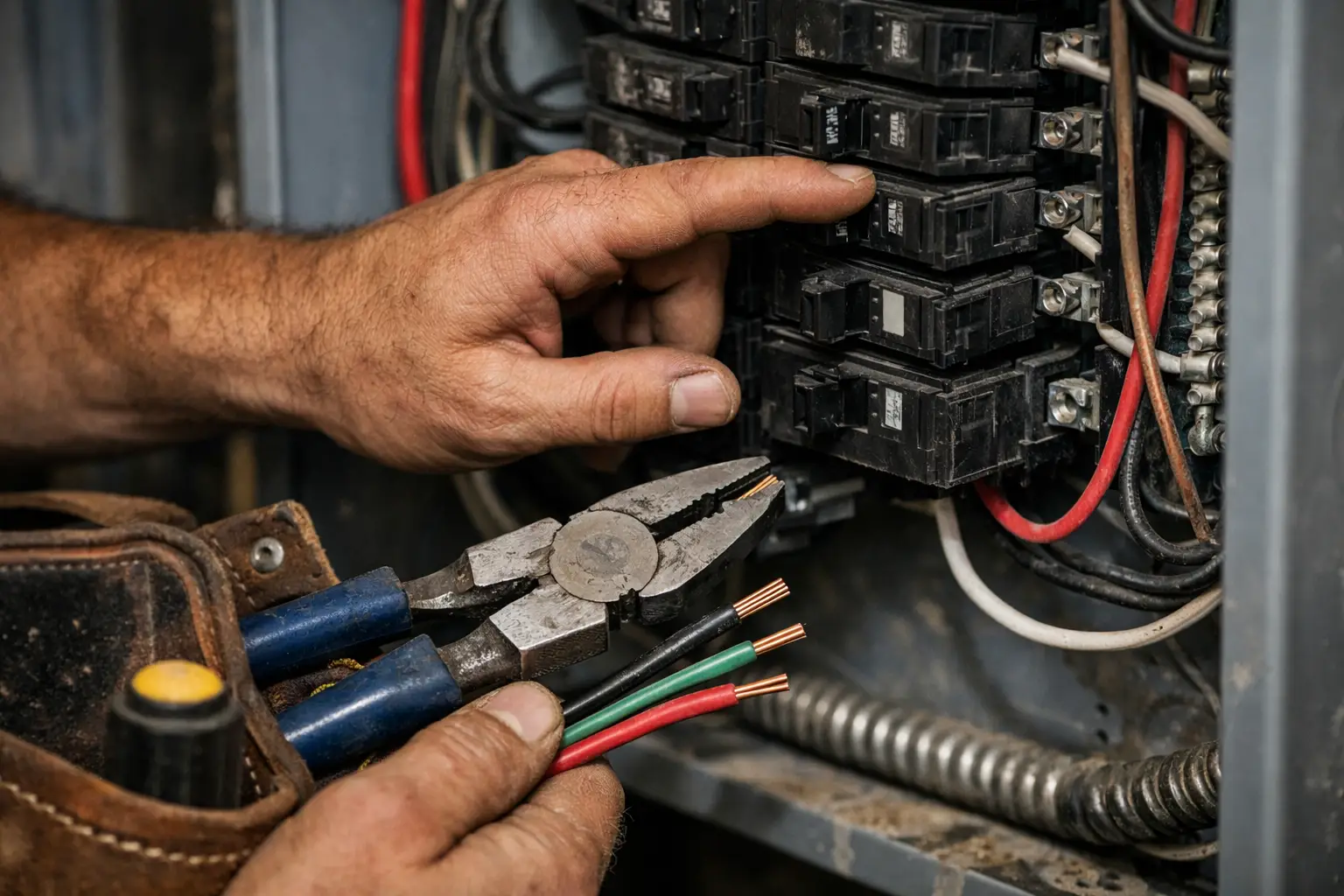
You reset a breaker, it holds for a while, then trips again when the microwave starts, the hair dryer kicks on, or the AC comes back up. That is usually the moment homeowners ask, why do breakers keep tripping if nothing seems obviously wrong? The short answer is that the breaker is doing its job. The harder part is figuring out whether it is reacting to too much demand, a wiring problem, a bad device, or a breaker that has simply gotten weak over time.
A tripping breaker is not just an annoyance. It is a signal. Sometimes that signal is simple, like too many high-draw appliances sharing one circuit. Sometimes it points to a deeper issue in the panel, a failing receptacle, a loose connection in the field, or a fault that only shows up under certain conditions. The details matter.
Why do breakers keep tripping in the first place?
A breaker trips when it senses something outside normal operating conditions. In most homes, that means one of three things: overload, short circuit, or ground fault. Newer specialty breakers can also trip because they detect arcing behavior that standard breakers would ignore.
An overload is the most common and the least dramatic. The circuit is being asked to carry more current than it was designed for. Think space heater plus vacuum plus bedroom outlets all on the same 15-amp breaker. Nothing may be broken. There is just too much running at once.
A short circuit is more serious. That happens when hot and neutral make unintended contact, often because of damaged insulation, a failed device, or wiring problems inside a box. Current rises fast, and the breaker trips quickly.
A ground fault is similar, except the current is taking an unintended path to ground. In kitchens, bathrooms, garages, outdoor areas, and other locations where moisture is part of the picture, that matters a lot. If you have a GFCI or dual-function breaker, it may trip even when the problem is not obvious to the homeowner.
Then there are arc faults. These are common in bedrooms, living areas, and other parts of newer or updated homes. AFCI breakers are designed to catch dangerous arcing patterns that can happen with loose terminations, damaged cords, or failing devices. They can feel finicky, but many times they are telling the truth.
The most common causes in real homes
In older Huntsville-area homes, overloaded circuits are routine. Houses built before modern appliance loads were common were not laid out for two refrigerators, a garage freezer, gaming setups, big-screen TVs, office equipment, and EV charging on top of normal use. A circuit that worked fine twenty years ago can start tripping now simply because the house is being asked to do more.
Kitchen circuits are frequent trouble spots. Microwaves, toaster ovens, coffee makers, and air fryers draw real power. If a microwave shares a small-appliance circuit or, worse, lands on a circuit feeding other rooms, tripping is not surprising.
Bathroom circuits see the same pattern. Hair dryers and curling tools can push a lightly built circuit to its limit fast. Garage and exterior circuits also get overloaded when refrigerators, freezers, battery chargers, pressure washers, and outdoor equipment all stack up.
Sometimes the load is not the issue. A bad receptacle can heat up internally and create intermittent faults. A loose neutral can make a circuit behave unpredictably. A worn breaker can nuisance-trip, especially if it has been overheating for a while. We also see problems after remodel work where something got extended, spliced, or moved and the circuit protection no longer matches what is actually happening downstream.
What tripping patterns usually mean
The pattern tells you a lot.
If the breaker trips only when you run several appliances at once, that points toward overload. If it trips the second you plug in one specific appliance, the appliance may be the problem. If it trips randomly, especially at night or during HVAC cycling, the fault may be hidden in wiring, a junction, or a shared load you are not thinking about.
If a breaker will not reset at all, that deserves more attention. It can mean the fault is still present, the breaker itself has failed, or there is a more serious issue in the panel or circuit.
If an AFCI or GFCI breaker trips with no obvious heavy load, do not assume the breaker is just bad. Sometimes it is. More often, it is catching leakage current, a damaged cord, a loose device terminal, moisture intrusion, or an older appliance that does not play well with modern protection.
This is where homeowners get frustrated, because the problem is not always visible. The lamp still works. The outlet still looks normal. The circuit only acts up once every few days. Electrical faults do not always announce themselves with sparks and smoke.
When it is probably not just a nuisance
A breaker that trips once after someone plugs too much into one room is one thing. A breaker that trips repeatedly under ordinary use is another.
Pay attention if you notice burning smell near the panel or a receptacle, buzzing, crackling, warm cover plates, dimming lights tied to appliance use, or breakers that feel loose or hot. Those are not watch-and-wait symptoms. They suggest heat, poor terminations, failing components, or a panel issue that needs real diagnosis.
The same goes for breakers that started tripping after a storm, after water got into an exterior box, or after a major appliance was installed. We see this with hot tubs, EV chargers, new HVAC equipment, and garage conversions. The added load changes the electrical picture, and the old setup may no longer be enough.
What a licensed electrician looks at
A proper diagnosis is not guessing and swapping parts until something stops tripping. A good electrician starts by identifying what the breaker protects, what type of breaker it is, how the circuit is loaded, and whether the tripping lines up with overload, fault current, or nuisance behavior from a failing component.
From there, the work may involve checking for loose terminations, damaged devices, signs of heat, shared neutrals, moisture issues, appliance-related faults, or panel problems. Sometimes the fix is straightforward, like moving a load or replacing a bad receptacle. Other times the right answer is a dedicated circuit, a breaker replacement, or a panel upgrade because the home has outgrown its original electrical layout.
That last part matters. Not every tripping breaker means the house is unsafe, but repeated trips are often a sign the system is undersized for how the home is actually being used. If you are adding modern loads to an older house, the code-compliant answer is often more infrastructure, not more extension cords and not a bigger breaker slapped onto an old wire.
Why bigger is not better
Homeowners sometimes ask whether installing a larger breaker will stop the tripping. It might stop the tripping briefly. It can also create a much bigger problem.
Breakers are sized to protect the wire, not to make the inconvenience go away. If a 15-amp circuit keeps tripping, replacing it with a 20-amp breaker without verifying the conductor size and the full circuit design is the kind of shortcut that overheats wiring inside walls and attics. That is how a minor annoyance turns into real damage.
The right fix depends on the cause. If the issue is overload, you reduce the load or add properly designed circuits. If the issue is a fault, you find the fault. If the issue is old equipment, you replace the failing component with the correct one.
Why do breakers keep tripping in older homes more often?
Older homes tend to have fewer circuits, smaller service capacity, and years of added devices, remodel changes, and wear at terminations. Even when the original work was decent, time is hard on electrical connections. Metals expand and contract. Devices loosen up. Moisture gets where it should not. Panels age.
That does not mean every older home needs a full rewire. It does mean repeated breaker trips should be taken seriously, especially if the home has had piecemeal additions over the years. A house can have perfectly normal-looking switches and receptacles while still hiding overloaded branch circuits or questionable splices in the attic or crawlspace.
What you can do before you call
You do not need to take the panel apart to be helpful. Make note of what was running when the breaker tripped, whether it happens at a certain time, and whether one appliance seems tied to it. If the breaker label is inaccurate, that is useful information too. Many panels are poorly identified, and that slows down diagnosis.
You can also unplug portable loads on that circuit and see whether normal use still causes a trip. That is not repair work. It is just narrowing the pattern. If the breaker still trips with light use, or if it trips immediately, it is time to stop resetting it and get it checked.
At Huntsville Wire and Home, this is the kind of call we like because a good diagnosis saves homeowners from buying the wrong fix. Sometimes the answer is simple. Sometimes the breaker is warning you that the house needs a better plan for the loads you have now. Either way, the goal is the same: find the real cause, fix it cleanly, and stop chasing the symptom.
If your breaker keeps tripping, treat it like useful information, not background noise. Electrical systems usually tell you when they are under strain. The smart move is listening before the problem gets more expensive.