A thunderstorm rolls through Madison, the power blinks once, and nothing seems wrong – until your refrigerator control board quits two days later. That is usually when homeowners start asking if a whole house surge protector worth it is more than just a sales pitch. In a lot of homes, the honest answer is yes. But not for every house, and not for every reason.
This is one of those upgrades that gets oversold by some companies and shrugged off by others. The real answer sits in the middle. A whole-house surge protector is not magic, and it is not a substitute for good wiring, proper grounding, or point-of-use protection on sensitive electronics. What it does do is give your electrical system a first line of defense when voltage spikes hit the home.
What a whole-house surge protector actually does
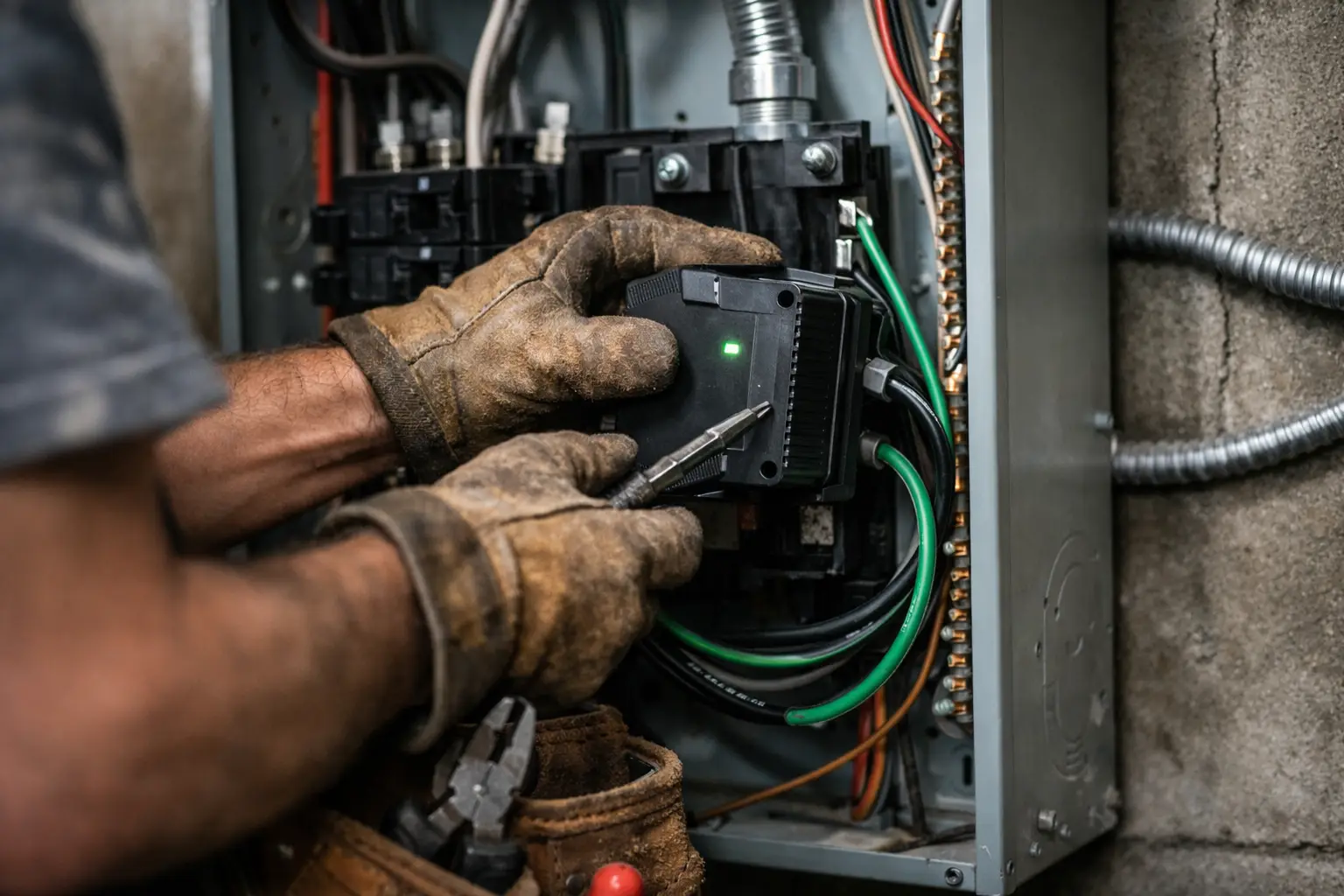
A whole-house surge protector is typically installed at the main panel or meter area, depending on the equipment and the house setup. Its job is to divert excess voltage away from branch circuits before that spike spreads through the home and reaches appliances, electronics, and control boards.
That matters more than people realize. Modern homes are full of equipment that does not handle voltage irregularities well. Refrigerators, HVAC systems, washing machines, dryers, microwaves, garage door openers, tankless water heaters, EV chargers, and smart home gear all contain circuit boards. Those boards are convenient when everything is working and expensive when they are not.
A surge does not have to look dramatic to do damage. It can come from lightning nearby, utility switching, a downed line event, or large equipment cycling on and off. Sometimes the damage is immediate. Sometimes it is cumulative and shortens the life of electronics over time.
Is a whole house surge protector worth it for most homeowners?
For many homeowners in Huntsville, Madison, and Harvest, a whole-house surge protector is worth it because the cost of installation is usually a lot lower than the cost of replacing even one major appliance board. A single HVAC board or refrigerator board can turn into a repair bill that makes the surge protector look cheap.
That said, it depends on the house. If you have an older panel that is already overloaded, has grounding issues, or needs replacement, then surge protection should not be treated as the main fix. It is an upgrade that works best when the underlying electrical system is in good shape. If the panel is marginal, the first conversation may need to be about a panel repair or upgrade.
It also depends on what is in the house. If your home has newer appliances, multiple TVs, computers, smart thermostats, a security system, internet equipment, or an EV charger, your risk exposure is simply higher. The more electronics and control boards you have, the more sense surge protection makes.
What it protects well – and what it does not
This is where a straight answer matters.
A whole-house surge protector does a good job reducing the impact of many incoming surges that enter through the electrical service. It helps protect large appliances and distributed electronics throughout the house. It is especially useful for equipment that is hardwired or not easy to plug into a standard power strip.
What it does not do is stop every possible surge in every situation. A direct lightning strike is a different level of event. Good surge equipment helps, but no electrician should promise that one device makes a home invincible. It also does not replace plug-in surge protectors for sensitive electronics like computers, entertainment systems, and office equipment. Those still have a role.
Think of it as layered protection. The whole-house device catches a lot at the front door. Point-of-use surge strips clean up what is left for your most delicate gear.
Why this matters more in real houses than on product packaging
Most homeowners are not worried about abstract voltage theory. They are worried about the air conditioner going down in July, the fridge failing full of groceries, or the internet equipment getting cooked after a storm. That is the practical side of this conversation.
In the field, the homeowners who benefit most from surge protection are usually the ones with expensive mechanical systems and a normal amount of bad luck. They are not doing anything wrong. They just own a house with modern electrical loads in an area where storms, utility events, and power interruptions happen.
North Alabama gets its share of weather. Add in grid switching, neighborhood growth, and heavier electrical demand from newer equipment, and surge protection starts looking less like an upsell and more like basic risk management.
When a whole-house surge protector makes the most sense
There are a few situations where the value is pretty obvious. One is after a panel upgrade. If you are already doing major electrical work, adding surge protection is often an easy call because the panel is accessible and the protection becomes part of the overall system.
Another is when you are adding expensive loads. If you are installing an EV charger, replacing an HVAC system, adding a hot tub, or updating kitchen appliances, it makes sense to protect that investment. You are putting more money into electrically controlled equipment, so protecting it is not overthinking it.
It also makes sense if your house has had nuisance issues after storms or outages. Maybe clocks reset often, GFCIs trip after a blink, or a control board has failed before. Those are not perfect proof of surge damage, but they are signs that your electrical system is seeing events worth paying attention to.
When it may not be the first thing to spend money on
There are cases where surge protection is not the first priority.
If your panel is obsolete, damaged, improperly grounded, or showing signs of heat and wear, that should be addressed first. If you have known electrical problems like flickering lights, loose connections, or a service that is undersized for the home, a surge protector is not the fix for those problems.
It is also fair to say that if you live in a very small home with minimal electronics and aging appliances you plan to replace soon, the urgency may be lower. That does not make surge protection a bad idea. It just means the return on investment may not feel as immediate.
The part most sales pitches skip
Not all whole-house surge protectors are equal, and not every installation is thoughtful. The device rating matters. The panel compatibility matters. The grounding and bonding in the home matter. Placement matters. If the electrical system itself has issues, the best surge device in the world is being asked to work with one hand tied behind its back.
That is why this is not a product-only decision. It is a system decision. A licensed residential electrician should look at the panel, confirm the grounding path is correct, and recommend protection that fits the house instead of reading from a flat-rate menu.
This is also why homeowners get frustrated with big-chain service calls. Sometimes they get a hard pitch without much explanation. If a contractor cannot explain what the surge protector does, what it will not do, and why it makes sense for your specific home, that is a red flag.
Cost versus replacement risk
Homeowners often ask the right question in the wrong way. They ask, “How much is a whole-house surge protector?” The better question is, “What am I risking without one?”
If a power event takes out a refrigerator board, a microwave control, a Wi-Fi router, and part of the HVAC system, you are suddenly dealing with a very expensive week. Even one of those repairs can exceed the cost of adding quality surge protection at the panel.
No one can promise a specific dollar-for-dollar return, because surge events are unpredictable. But from a practical electrician’s standpoint, this upgrade usually pencils out in homes with modern equipment.
Our plain answer
If you are asking whether a whole house surge protector worth it for a typical North Alabama homeowner, the plain answer is yes, most of the time. Especially if your home has newer appliances, electronics everywhere, or recent electrical upgrades.
The catch is that it needs to be installed as part of a sound electrical system, not slapped onto a problem panel and called good. Surge protection is smart protection, not miracle protection.
At Huntsville Wire and Home, this is the kind of upgrade we like because it is practical. It does not look flashy, but it protects the equipment homeowners actually depend on every day. And when storms roll through and the power starts blinking, practical beats flashy every time.
If your house has expensive electrical gear and you plan to stay there for a while, surge protection is one of those upgrades that is easy to appreciate after the first ugly power event. Better to make that decision before a control board makes it for you.