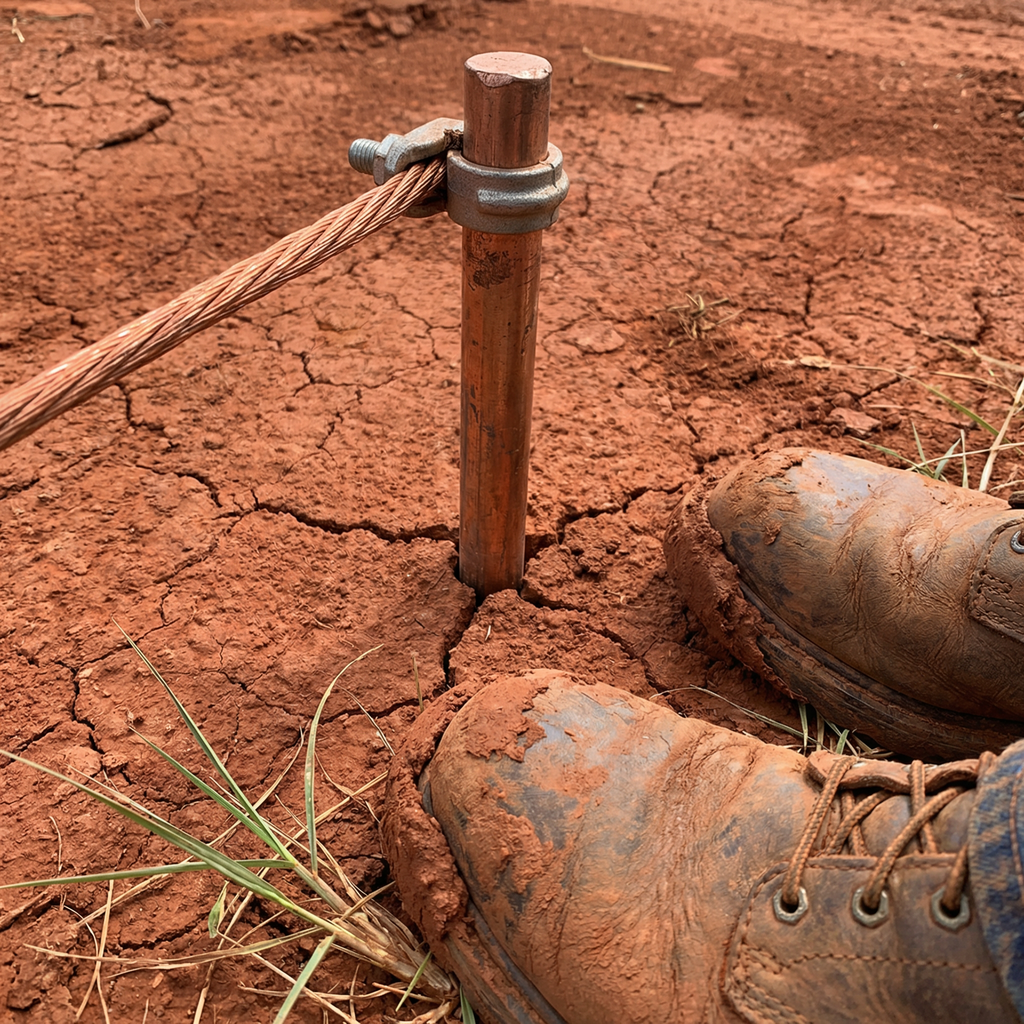
Digging in Madison County is a surefire way to ruin a good pair of boots, but that dense red clay does more than just stain your carpet. It can actually make electrical grounding a real headache because the soil here is often too compact or dry to let electricity dissipate quickly. When we drive a ground rod, we are looking for low resistance so a surge has somewhere to go other than your expensive electronics, but our local dirt fights back harder than the softer soil you might find in other parts of the country.
Because of that high natural resistance, a single ground rod usually isn’t enough to satisfy the electrical code or keep your home safe here. You essentially need more surface area to convince the electricity to leave the system, which is why we almost always drive two eight-foot rods spaced at least six feet apart. It acts like a second lane on the highway for stray voltage, ensuring that if a storm rolls over the mountain, the excess energy goes into the yard rather than blowing through your panel.
If you are living in an older home, you might only have one rod installed—or worse, a ground wire just clamped to an old water pipe that has since been replaced with plastic. Huntsville Wire and Home can come out to test your grounding system and drive that second rod if the resistance readings are too high, giving your system a much better fighting chance. Go take a peek near your meter can outside; if the wire coming off the bottom looks broken, corroded, or missing, drop us a message at (256) 469-0733 so we can get it secured.
#huntsvilleelectrician #huntsvillealabama #hamptoncove #madisoncounty #huntsvillehomes