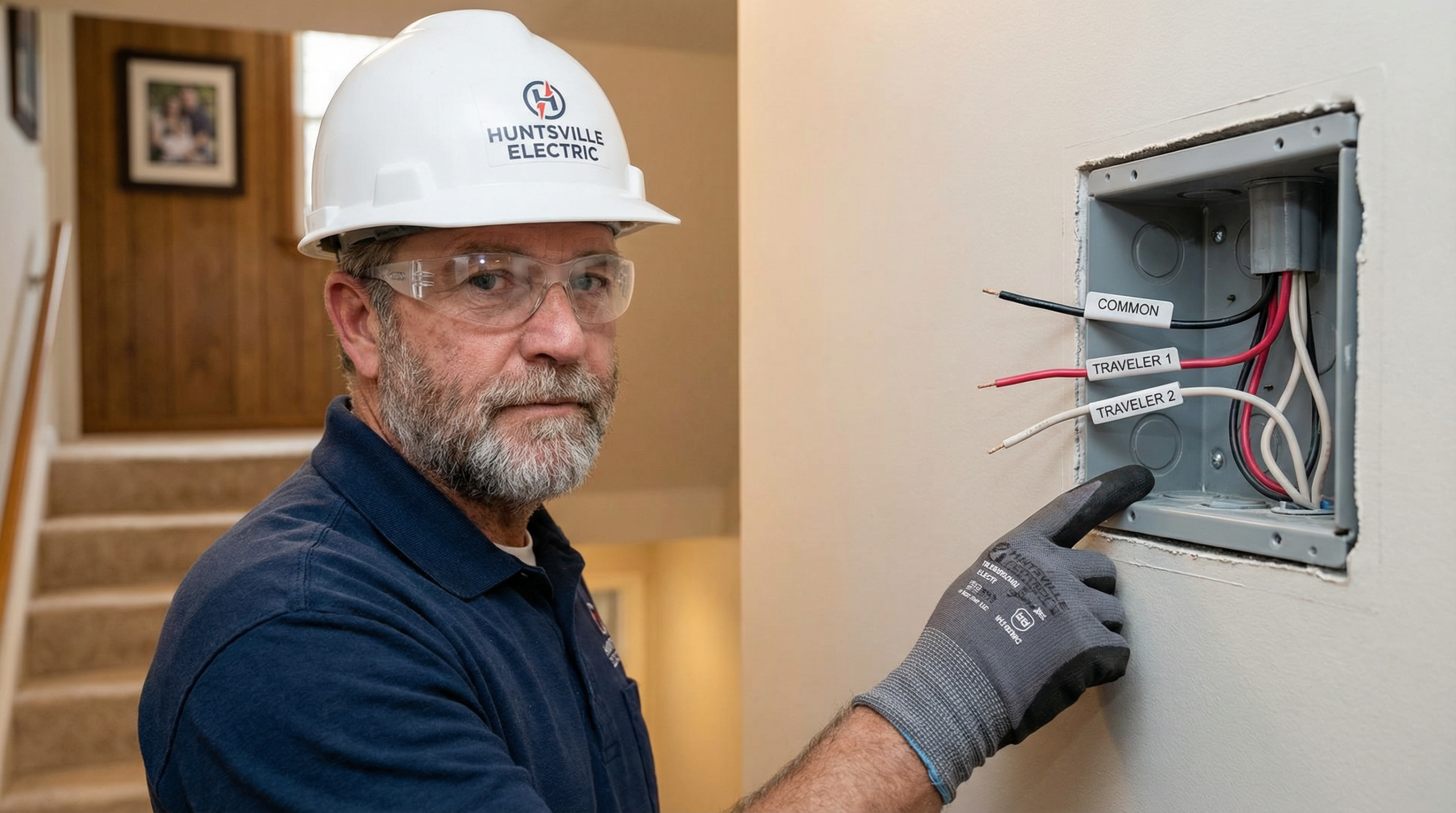
Traveler Wires
Alright, listen up, folks. You ever walk into a commercial space, flip a switch, and then wonder how in the heck the lights also turn off from the other side of the room? That ain’t magic, it’s a 3-way switch, and the secret sauce to making it work like a charm? Traveler wires. These aren’t your average hot and neutral; these are the communicators, the backbone of multi-location control. Don’t let anyone tell you it’s complicated – it’s just precision.
Now, here’s where the newbs get tripped up. Every 3-way switch has a common terminal, and that’s your dedicated power source (or switched leg to the load). Then you’ve got your travelers. There are two of ’em, and their job is to shuttle power back and forth between the switches, directing the current path. They’re like the two lanes on a highway, only one carries traffic at a time, depending on the switch’s position. The common is the entrance/exit ramp, the travelers are the main road. Get that straight, and you’re halfway there.
So, what happens if you get cute and mix up your common with a traveler? Oh, buddy, you’ll know. Your lights won’t just flicker; they’ll act possessed, turning on when they should be off, or staying off when they should be on, defying logic and making you look like an amateur. It’s a dead giveaway you didn’t pay attention to the details. In Huntsville, we do it right the first time. Identify your common (mark it!), keep your travelers separate, and those lights will obey. Period.
#huntsvilleelectrician #huntsvillealabama #hamptoncove #madisoncounty #huntsvillehomes