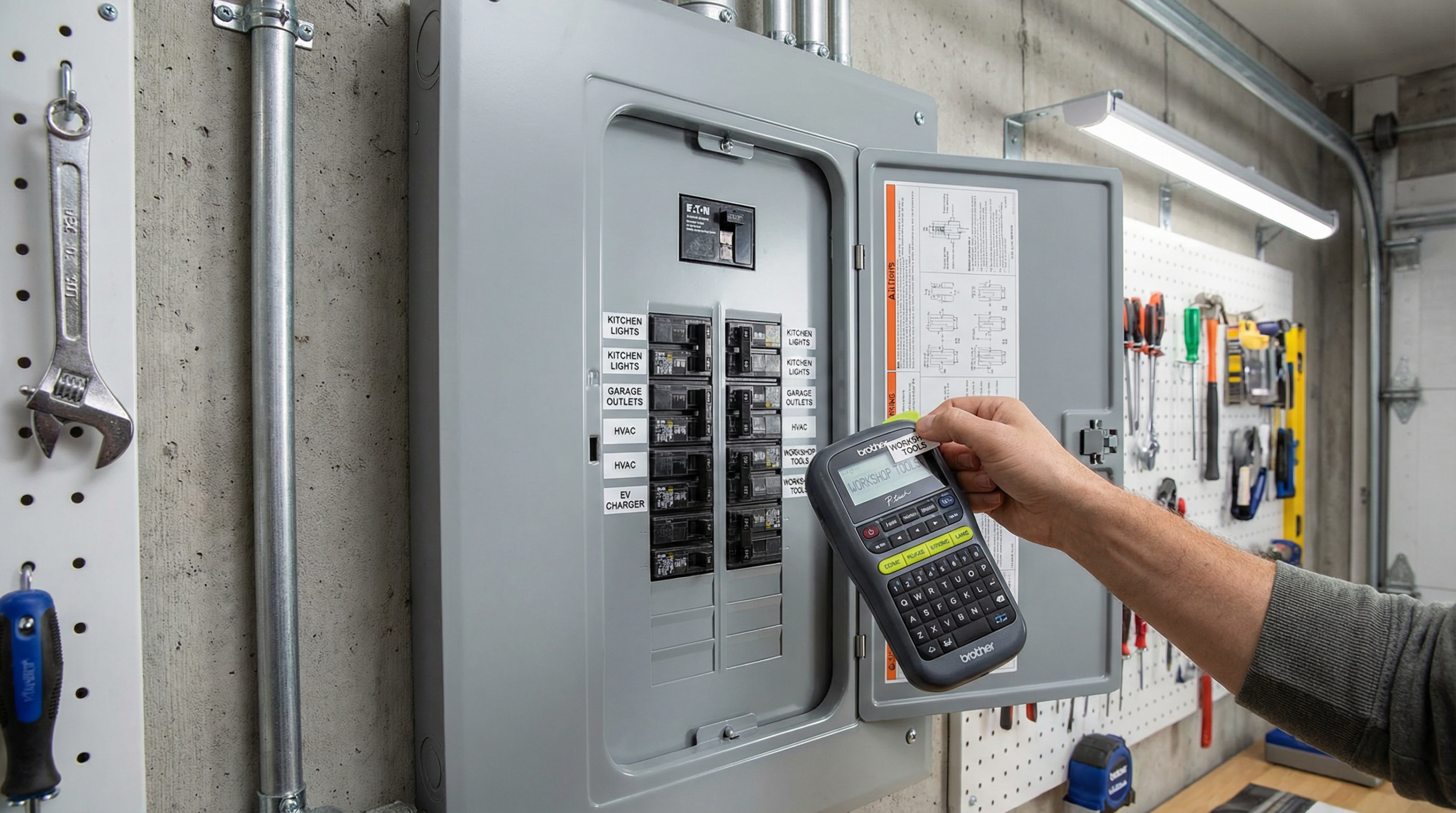
Label Outlets
Look, I get it. When you’re staring at that intimidating metal box in your garage or basement, it’s easy to just scribble “Lights” or “Outlets” next to a breaker number. But let me tell you, as someone who spends his days inside these metal boxes across Huntsville, that vague scribble is about as helpful as a screen door on a submarine when you’re trying to find a tripped breaker at 2 AM. A properly labeled electrical panel isn’t just about neatness; it’s a critical safety feature and a massive time-saver.
Here’s why specificity matters: most circuits don’t just power “lights” or “outlets” exclusively. A single 15-amp circuit might feed a string of lights in your kitchen, half the receptacles on your north wall, and maybe even the countertop outlets on your island. When something trips, or you need to isolate power for a repair, a label like “Kitchen North Wall & Island” immediately tells you exactly what you’re dealing with. Contrast that with “Kitchen,” which could mean anything from the fridge to the disposal to the overhead lights. Every minute I spend hunting down which specific outlet is on what circuit is a minute you’re paying for. It’s not just about convenience; it’s about efficiency, safety, and frankly, saving yourself (or your electrician) a massive headache.
Take the time now to map out your circuits methodically. Test each breaker, identify exactly what goes off, and label it with precision. Think of it as investing in your home’s future and your own peace of mind. Not only will it make future troubleshooting a breeze, but it also ensures that anyone working on your electrical system – be it a DIY project or a professional – can quickly and safely isolate the correct circuit, preventing accidental shock or damage. This isn’t just a best practice; it’s a fundamental aspect of intelligent home management.
Grab a friend, a lamp, and a marker, and methodically map out every breaker in your home, labeling them with precise room and function descriptions.
Leave a Reply