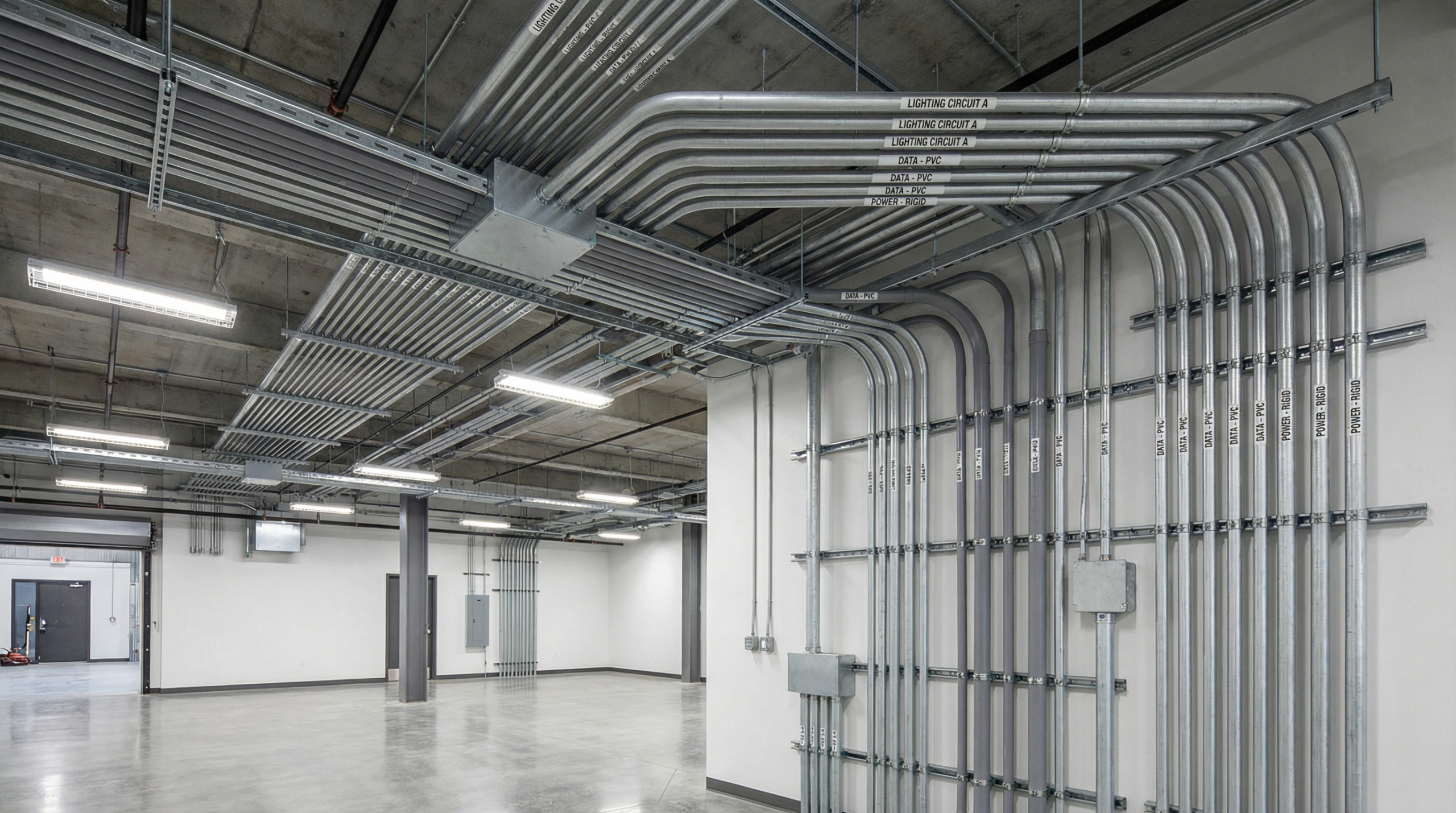
Conduit Basics
Alright, let’s talk conduit. Most folks just see wires, but a sharp electrician sees the whole system, and conduit is a huge part of that. Think of it as the bulletproof vest for your electrical wiring. It’s the protective pathway that shields your conductors from physical damage, moisture, and even some chemicals. Whether we’re running lines through a busy commercial space or upgrading the service to your detached garage here in Huntsville, properly installed conduit isn’t just code – it’s peace of mind, ensuring your electrical system is robust and reliable for the long haul.
Now, here’s what the other guys won’t always tell you: not all conduit is created equal, and knowing when to use what is key. You’ve got everything from rigid metal conduit (RMC) that can take a beating, to electrical metallic tubing (EMT) for more common indoor runs, and various PVC options for underground or wet locations. The difference between a handyman and a journeyman like me isn’t just knowing the names; it’s understanding the nuances of fill capacity, proper bending, securing methods, and ensuring every connection is watertight and ready to protect your investment, not just pass a quick inspection.
This isn’t just about running pipe; it’s about future-proofing your home and business. Sloppy conduit work leads to pinched wires, difficult upgrades, and potential safety hazards down the line. When I’m on a job in Hampton Cove or anywhere in Madison County, I’m not just pulling wire; I’m building a resilient electrical infrastructure. That’s the confidence you get when you hire someone who treats your wiring like the vital circulatory system of your property. It’s the kind of work that makes you want to invite me in for that beer after the job’s done.
#huntsvilleelectrician #huntsvillealabama #hamptoncove #madisoncounty #huntsvillehomes