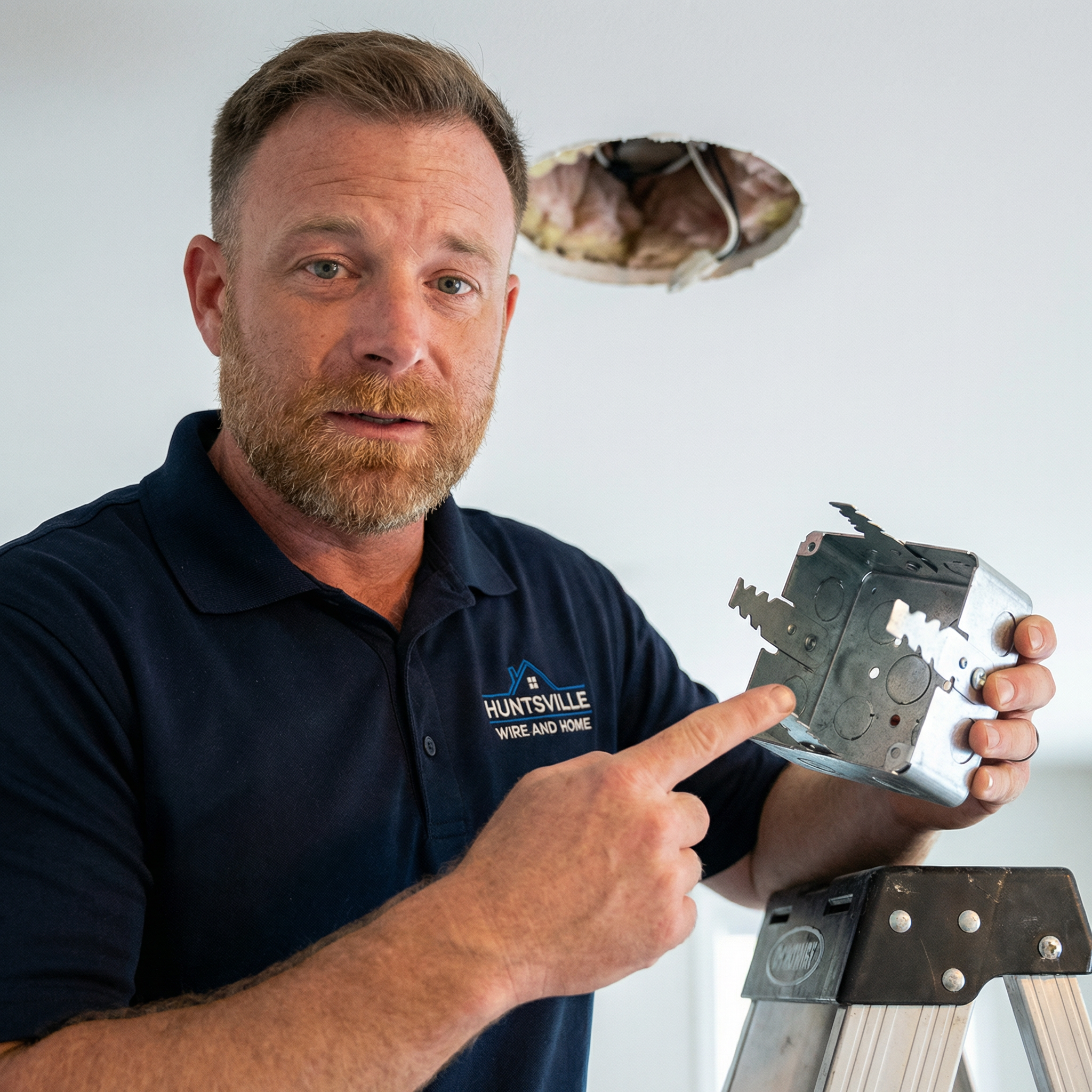
We call it the “Wobble of Death” for a reason. When you walk into a room and see a ceiling fan gyrating like it’s trying to take flight, it’s rarely just a balance issue. Most of the time, that heavy motor is hanging from a standard blue plastic box designed to hold a few ounces of light fixture, not a thirty-pound appliance spinning at high RPMs. Standard electrical boxes are usually just nailed into the side of a joist, and over time, the constant torque and vibration loosen those nails until gravity takes over. It’s simple physics: dynamic loads need structural support, or eventually, that fan is coming down.
Fixing this doesn’t mean tearing up your entire ceiling, thankfully. The electrical code requires a specific “Fan Rated” brace box because these units use a heavy-duty metal tension bar that spans between two ceiling joists. The bar cranks outward, digging metal teeth into the wood to lock it solidly in place, isolating the vibration from your drywall. While a standard box costs about fifty cents, a fan-rated brace costs a bit more, but it is significantly cheaper than repairing a hole in your floor or paying a medical deductible after a fan lands on your dining table. Investing in the right hardware upfront is the only way to ensure that the only thing moving is the air.
Next time you’re swapping out a light fixture for a fan to beat the Alabama humidity, grab a flashlight and look inside the junction box before you wire anything up. If you see a metal hexagon head screw going into the top of the box or a stamp explicitly reading “Fan Rated,” you’re likely safe to proceed. If it’s just a plain plastic box held up by two nails in the corner, save yourself the worry and swap that box out before you even think about mounting the bracket.
#huntsvilleelectrician #huntsvillealabama #hamptoncove #madisoncounty #huntsvillehomes
Leave a Reply