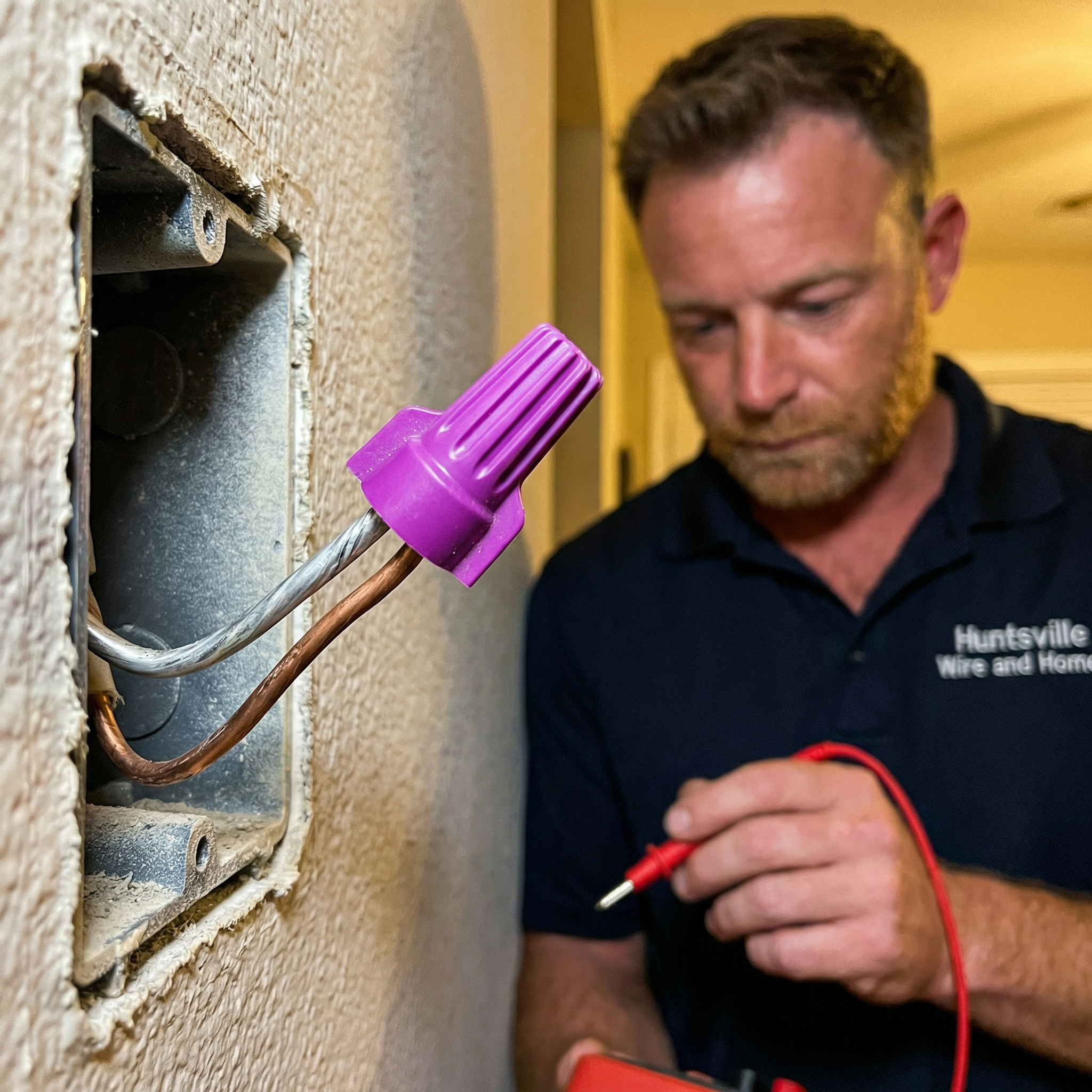
If you live in a home built around the mid-70s, you might have aluminum wiring hiding behind your drywall. Back then, copper prices spiked, so builders switched to aluminum to save money, but we eventually learned that aluminum expands and contracts much more aggressively than copper when electricity flows through it. Over decades, that constant thermal movement loosens the connections at your outlets and switches, creating gaps where electricity can arc and spark. The wire itself isn’t necessarily the problem; it’s those loose connection points that turn into little heat traps capable of starting a fire inside your walls.
You usually don’t need to rip out your walls for a complete rewire to sleep soundly. The industry-standard fix is “pigtailing,” where we attach a short piece of copper wire to the existing aluminum using specific purple wire nuts. These connectors are filled with an antioxidant compound that stops corrosion and have a specialized spring designed to grip both soft aluminum and harder copper securely. It essentially upgrades the connection points to modern safety standards for a fraction of the cost of running new wire throughout the house.
Next time you are near your breaker panel, check the labels to see if “AL” or “Aluminum” is noted, or safely pop off a switch cover to look for silver-colored wire insulation. If you spot it, ensure you aren’t using standard orange or yellow wire nuts for any DIY replacements, as those plastics aren’t rated for the heat differences. Sticking to the AL/CU rated purple connectors is the only way to ensure that the splice holds tight and your home stays safe from overheating components.
#huntsvilleelectrician #huntsvillealabama #hamptoncove #madisoncounty #huntsvillehomes
Leave a Reply