Low Voltage
The separation of low voltage (LV) wiring from power lines is a fundamental principle in electrical installation, mandated by codes like the National Electrical Code (NEC) to ensure safety, prevent electrical interference, and maintain system reliability.
Why Separation is Critical:
1.Safety: The primary reason is to prevent accidental contact between high-voltage power and low-voltage circuits. This minimizes risks of electric shock, fire, and equipment damage, especially if insulation on either cable is compromised.
2.Electromagnetic Interference (EMI): Power lines generate electromagnetic fields that can induce unwanted noise and distortion (EMI/RFI) into sensitive low-voltage signals, such as data, audio, video, and control signals. Proper separation helps maintain signal integrity and system performance.
3.Voltage Induction: Close proximity can lead to voltage induction on low-voltage lines, potentially damaging sensitive equipment or creating hazardous touch voltages.
Key Separation Guidelines (Refer to NEC and Local Codes for Specifics):
•Physical Distance: This is the most common method. The NEC specifies minimum separation distances, which can vary based on the voltage level of the power circuit, the type of wiring, and whether the cables are run in parallel or crossing paths.
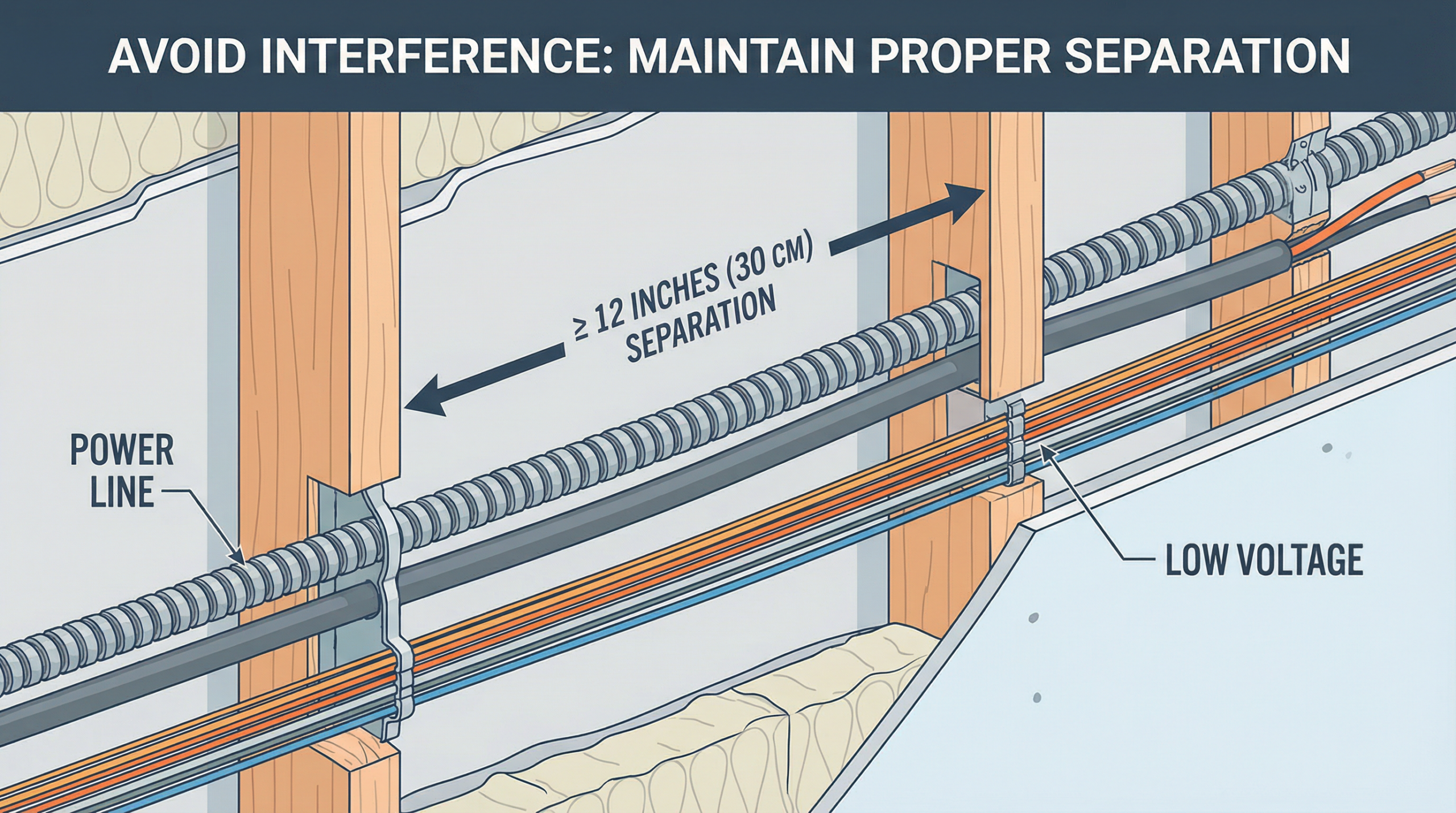
•Parallel Runs: For typical residential and commercial installations, a common guideline is to maintain at least 6 to 12 inches of separation between power and low-voltage cables run parallel to each other. Higher voltage power circuits require greater separation.
•Crossing Paths: When low-voltage and power cables must cross, they should do so at a 90-degree angle to minimize the length of parallel exposure and thus reduce inductive coupling. A minimum separation of 6 inches is often recommended, but always check local codes.
•Separate Raceways or Conduits: Running power and low-voltage wiring in entirely separate conduits, raceways, or cable trays is an effective way to achieve separation and is often required in commercial and industrial settings. This provides a physical barrier and maintains distance.
•Barriers: In some situations, approved non-conductive barriers can be used within a shared raceway or cable tray to separate different classes of wiring. However, this is less common for direct power/low-voltage separation and more for different classes of low-voltage circuits.
•Cable Types: Using shielded low-voltage cables can help mitigate EMI, but it does not negate the need for proper physical separation from power lines.
•Grounding: Proper grounding of both power and low-voltage systems, including cable shields, is essential to manage induced currents and ensure safety.
Common Scenarios and Best Practices:
•Inside Walls: When running cables inside walls, maintain separation by routing them in different stud bays or ensuring adequate distance. If they must cross, do so perpendicularly.
•Outdoor/Aerial Installations: Similar principles apply, often with more robust physical separation requirements due to environmental factors and higher voltage power lines.
•Panelboards and Enclosures: Maintain separation within electrical panels and enclosures, ensuring low-voltage control wiring is kept away from power busbars and terminals.
Consequences of Improper Separation:
•Safety Hazards: Risk of fire, electric shock, and equipment damage.
•System Malfunctions: Data corruption, audio hum, video noise, intermittent operation of control systems.
•Code Violations: Leading to failed inspections, rework, and potential fines.
Always consult the latest edition of the NEC (e.g., NEC Article 725 for Class 1, 2, and 3 circuits, and Article 800 for Communications Circuits) and any applicable local building codes or utility regulations before planning or executing electrical installations. When in doubt, err on the side of greater separation or consult a qualified electrician.
Your Next Move:
Review the specific separation requirements in your local electrical code for your next project, or consult a licensed electrician for complex installations.
#huntsvilleelectrician #huntsvillealabama #hamptoncove #madisoncounty #huntsvillehomes