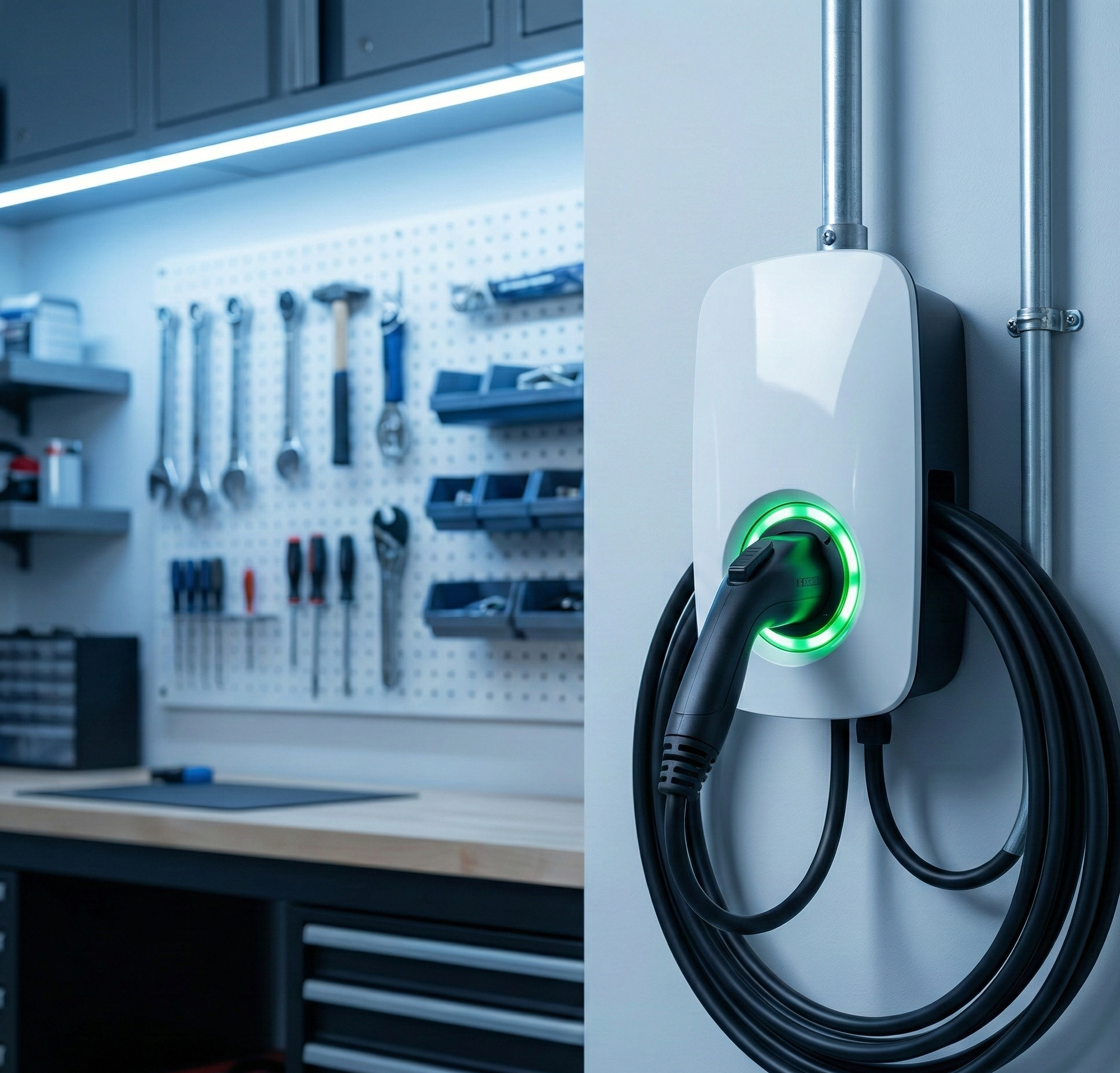
EV Charger Installations (NEC 2023 & 2026)
There is a massive difference between plugging in a dryer and plugging in a Tesla. A dryer runs for 45 minutes and cycles on and off. An Electric Vehicle charger runs at maximum capacity for 6 to 10 hours straight.
In the electrical world, we call this a “Continuous Load.” It generates heat. A lot of it.
The Code Update: Because of this heat, the NEC 2023 clamped down hard on DIY installations.
-
No Cheap Outlets: You can’t just buy a $10 range plug from the hardware store anymore. They melt under the stress. You need industrial-grade receptacles or a hardwired connection.
-
Load Calculations: You are legally required to prove your panel can handle the extra 50-60 amps before you install it.
The Lesson: This isn’t “amateur hour.” If you get this wrong, you don’t just trip a breaker—you melt the wall. This is one job where you need a “Qualified Person” to sign off on the math.
If you have questions or need help with electrical work in the Huntsville area, visit us at huntsvillewireandhome.com or give us a call. We’re here to help.
#rocketcity #huntsvilleelectrician #huntsville #EVcharging #NEC2023