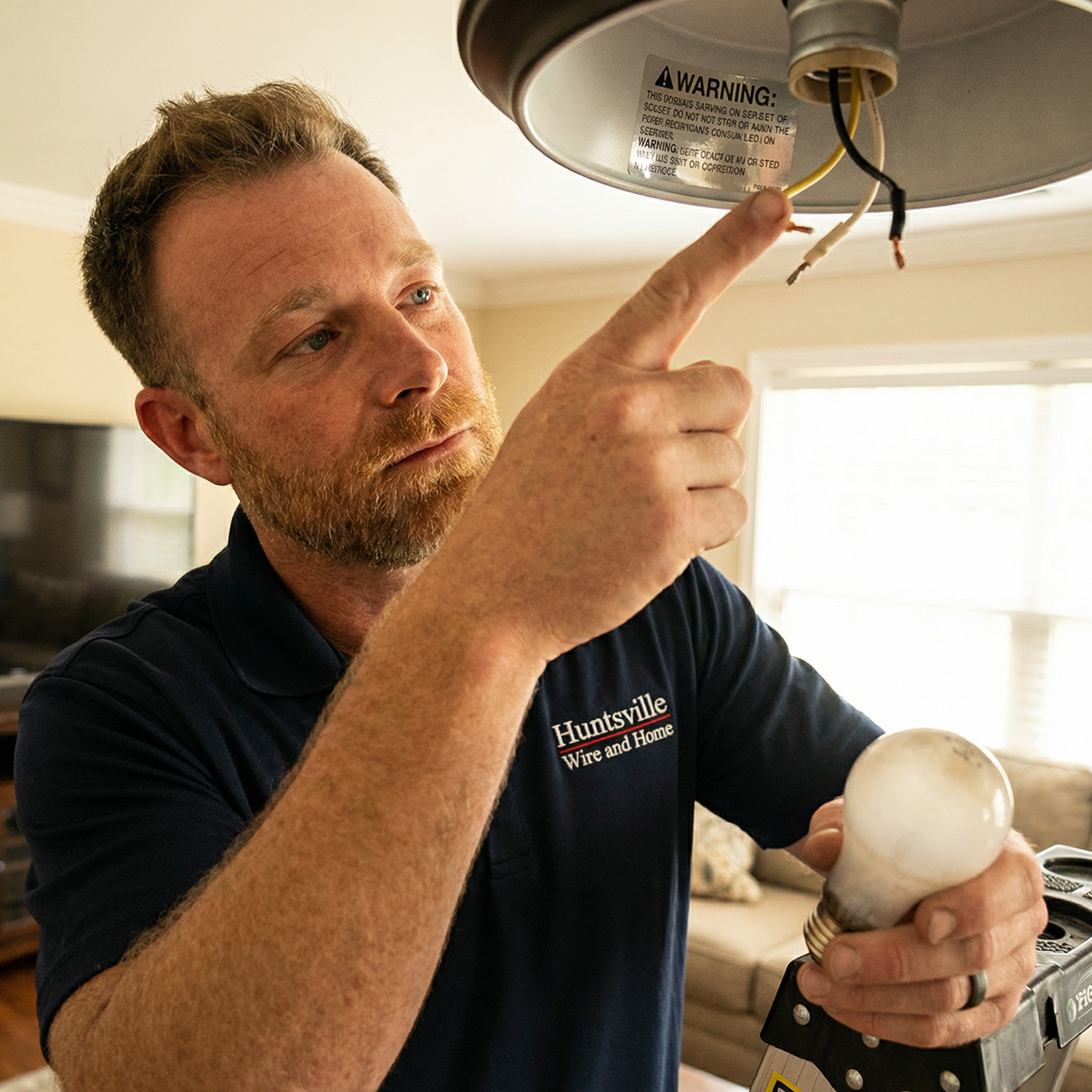
We’ve all been there—trying to brighten up a dim living room corner by swapping out a standard bulb for something stronger. But screwing a 100-watt incandescent bulb into a fixture rated for only 60 watts, a mistake known as “overlamping,” creates a fire hazard hiding in plain sight. Light fixtures are tested to handle specific amounts of heat, and when you exceed that limit, the excess thermal energy has nowhere to go. It slowly bakes the socket and melts the insulation on the wires inside the fixture, often leading to arcing or a short circuit long before you smell smoke.
Beyond the immediate safety risk, this habit hits your wallet harder than just the cost of electricity. Constant overheating makes the internal components brittle and prone to failure, meaning you will eventually be replacing the entire light fixture rather than just a bulb. I’ve seen beautiful vintage chandeliers and standard recessed cans ruined because the trapped heat warped the housing or scorched the ceiling drywall. It is an expensive mistake for a few extra lumens, especially when the damage to the permanent wiring inside your walls can require a much larger repair job.
To keep your home safe, take a second to look inside the socket cup or on the base of the fixture for a sticker indicating the maximum wattage. If you really need that daylight brightness, switch to LEDs. Since they draw a fraction of the power—usually 9 to 15 actual watts for a 100-watt equivalent—you can get all the light you want without risking melted wires or a call to the fire department.
#huntsvilleelectrician #huntsvillealabama #hamptoncove #madisoncounty #huntsvillehomes