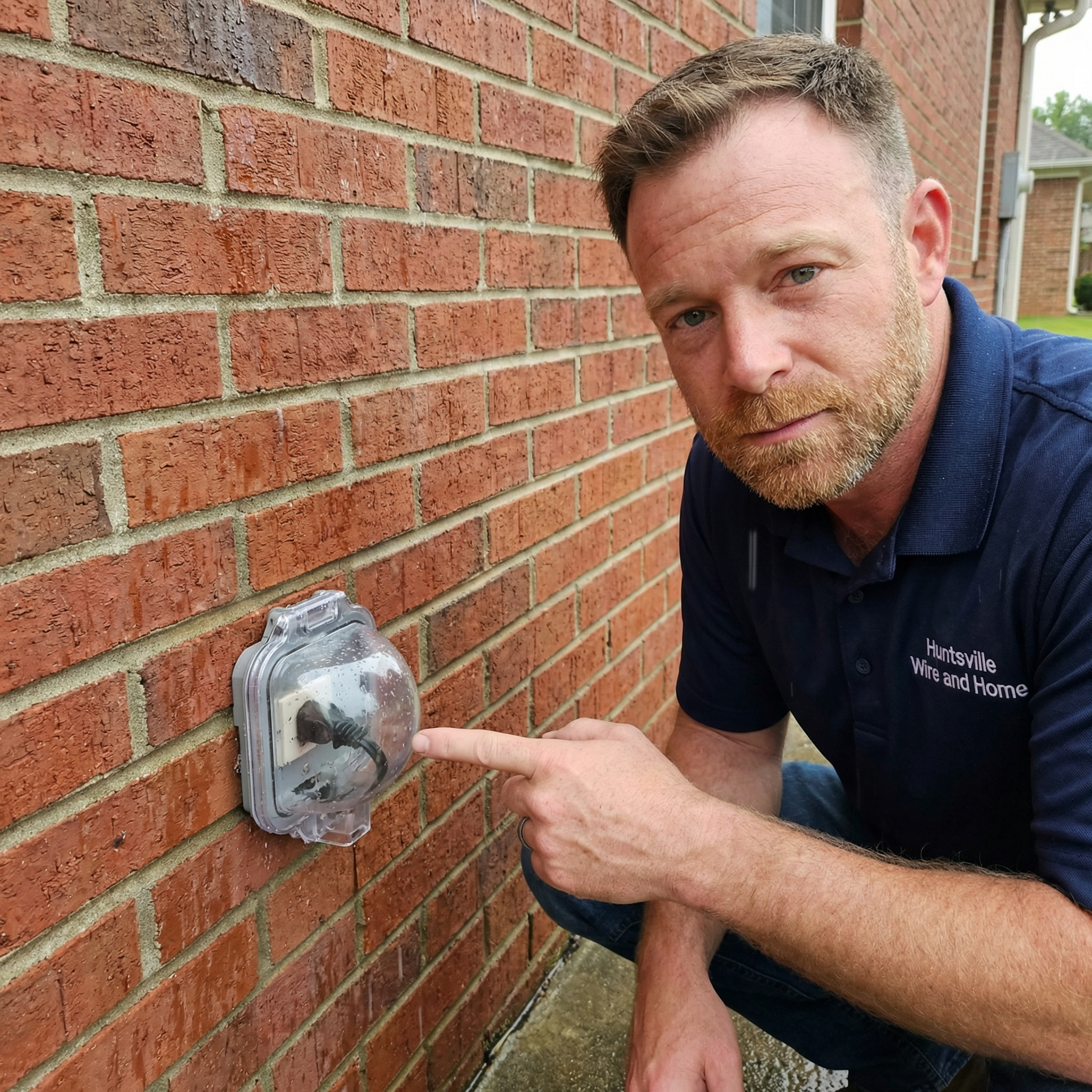
It usually happens during one of our heavy Huntsville downpours—your outdoor string lights go dark or the electric smoker shuts off mid-cook. It isn’t a ghost; it is water bridging the gap between the hot and neutral terminals inside your outlet. Your GFCI (Ground Fault Circuit Interrupter) is designed to sense that tiny leak of electricity—we are talking as little as 5 milliamps—and cut the power instantly to prevent electrocution. The device is doing exactly what it was built to do, but it is tripping because moisture is sneaking past a cover that wasn’t designed for how you are using it.
Most older homes around here were built with flat, metal flap covers. While those are technically rated as “weatherproof,” there is a major catch: they are only weatherproof when the flap is snapped shut with nothing plugged in. As soon as you plug in holiday decorations or a fountain pump, you have to prop that flap open, which acts like a funnel for blowing rain. If you leave anything plugged in outdoors, code requires an “extra-duty” in-use cover, commonly known as a bubble cover. These clear plastic domes latch all the way over the cord’s plug, creating a sealed environment so water sheds right off while your device stays powered.
Ignoring this issue leads to corroded copper contacts and wasted money on service calls to replace GFCIs that wear out from constant tripping. It is significantly cheaper to install a twenty-dollar bubble cover once than to replace damaged receptacle mechanisms every spring. If you decide to swap yours out, pay close attention to the foam gasket on the back of the new cover; if it doesn’t seal perfectly against uneven brick or siding, run a bead of clear silicone caulk across the top and sides of the box to stop water from trickling behind the outlet and causing faults from the inside out.
#huntsvilleelectrician #huntsvillealabama #hamptoncove #madisoncounty #huntsvillehomes