Nothing ruins a relaxing evening quite like your new living room lights strobing like a techno club. It’s not a poltergeist haunting your hallway; it’s actually a fundamental mismatch in technology. Most older homes here in Huntsville are fitted with standard rotary or slide dimmers designed decades ago for incandescent bulbs. Those old switches work by rapidly chopping up the electrical current—turning the power on and off 120 times a second—to lower the voltage. While old-school tungsten filaments just glowed dimmer with less juice, modern LED bulbs contain complex electronic drivers that get confused by that choppy power delivery, resulting in that annoying flicker or buzzing sound.
To fix this, you generally need to swap those legacy switches for ones specifically labeled “CL Rated” or “LED Compatible.” These newer dimmers are engineered to handle the low-wattage electronics inside your efficient bulbs without disrupting the sine wave of the electricity. Keeping the old dimmer isn’t just annoying to your eyes; it’s actually hard on your wallet. Running an LED on an incompatible dimmer stresses the internal driver, causing it to overheat and fail prematurely, meaning you’ll be buying replacements way sooner than that promised 20-year lifespan. It’s a small hardware update that ensures you actually get the efficiency you paid for.
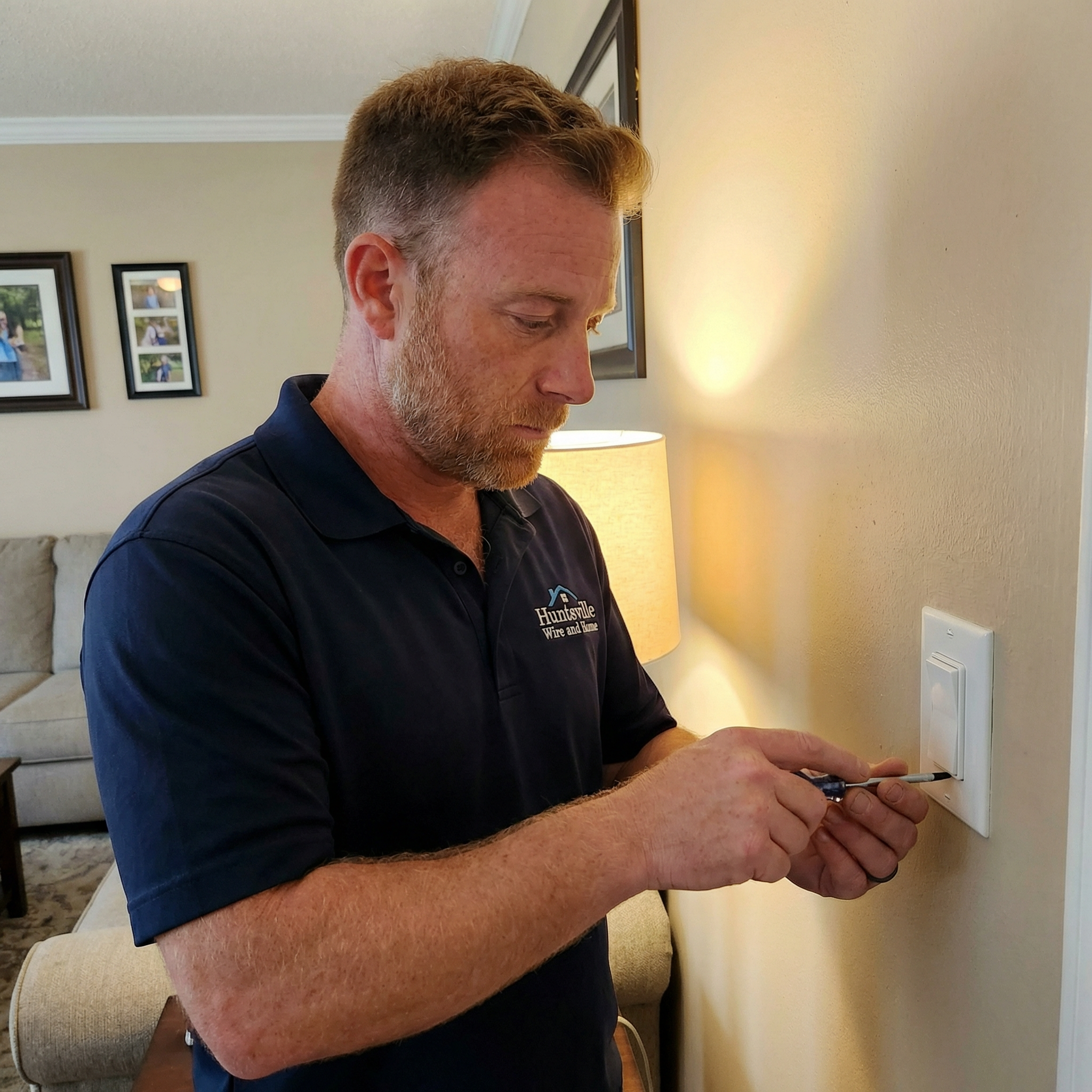
Before you toss a flickering bulb, take a close look at the dimmer switch itself, specifically under the faceplate. Many modern LED-specific dimmers feature a small “trim adjustment” wheel or slider designed to set the lowest stable dimming point. If your lights drop out or flicker only when they are dimmed all the way down, tweaking that little dial usually smooths everything out without needing a single wire cutter or a trip to the supply house.
#huntsvilleelectrician #huntsvillealabama #hamptoncove #madisoncounty #huntsvillehomes