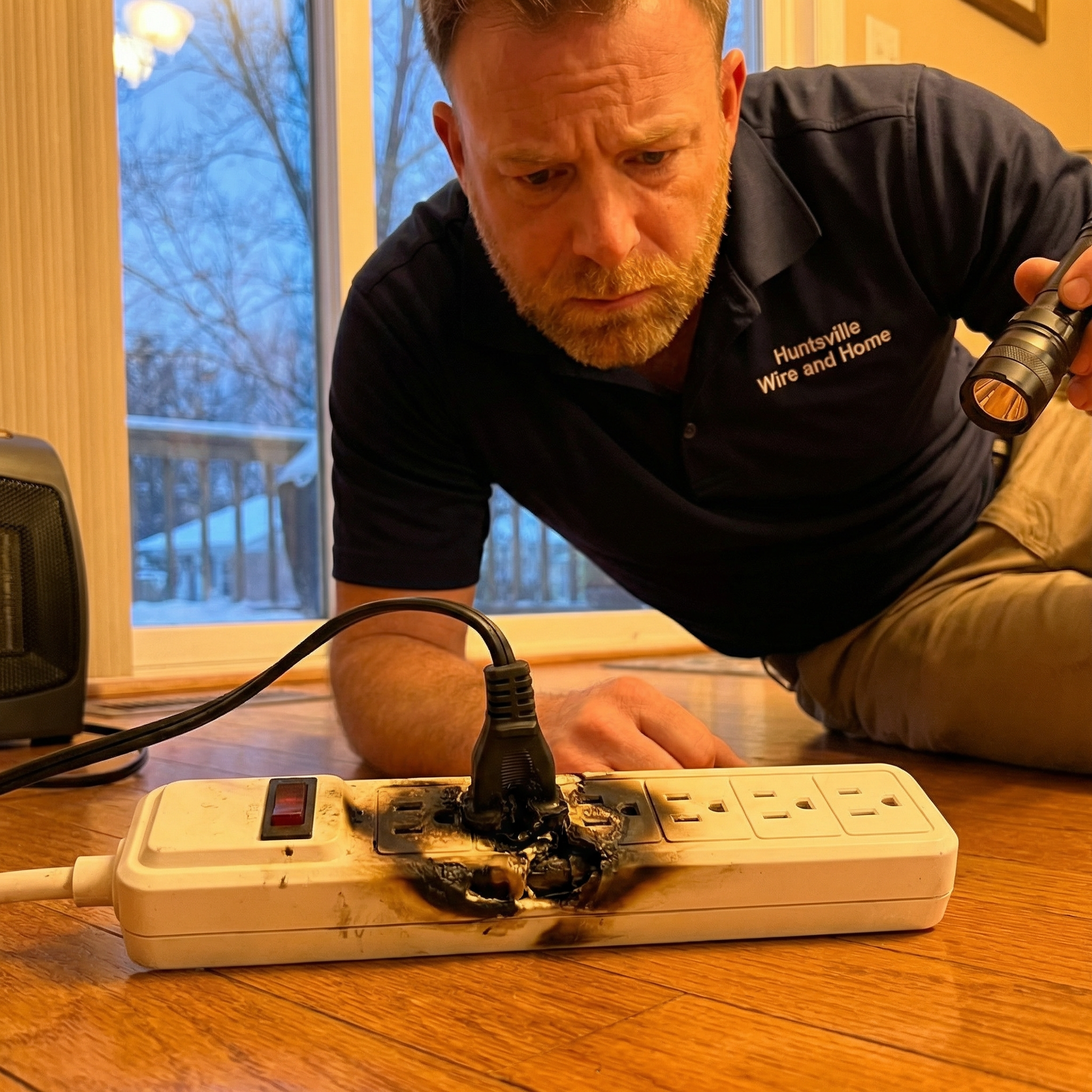
It gets chilly here in the Tennessee Valley, and I know how tempting it is to pull out that space heater to warm up a drafty bedroom. But before you plug it in, take a hard look at where you are connecting it. If you are eyeing a generic white plastic power strip, stop immediately. Those strips are typically designed for low-amperage electronics like lamps, televisions, or phone chargers, not the continuous high draw of a 1,500-watt heating unit. When you force that much current through the thin internal contacts of a cheap strip, resistance builds up almost instantly, essentially turning the power strip into a heating element itself until the plastic casing melts or catches fire.
This isn’t just bad luck; it is a battle between physics and economics that your home wiring will lose. A standard space heater pulls roughly 12.5 amps of continuous load. While many surge protectors claim a 15-amp rating on the package, they are often manufactured with the bare minimum copper thickness to keep costs down. Under a sustained heavy load, that thin metal simply cannot dissipate the heat effectively. I have seen too many outlets in Huntsville homes scorched black because a ten-dollar accessory couldn’t handle the heavy lifting required by a high-draw appliance. It is rarely a defect in the heater, but rather a dangerous mismatch in capacity.
The safest route is always the simplest one: plug your heater directly into a wall receptacle. Your in-wall wiring, especially in modern builds, is designed to handle that specific thermal load much better than an extension cord or multi-outlet strip ever could. If you absolutely must use an extension cord in a pinch, ensure it is a heavy-duty, 12-gauge cord rated specifically for major appliances. Regardless of how you plug it in, make a habit of feeling the plug after the unit has been running for twenty minutes; if it is hot to the touch, shut it down immediately.
#huntsvilleelectrician #huntsvillealabama #hamptoncove #madisoncounty #huntsvillehomes